Functional temporarily unavailable



General information about Buchach
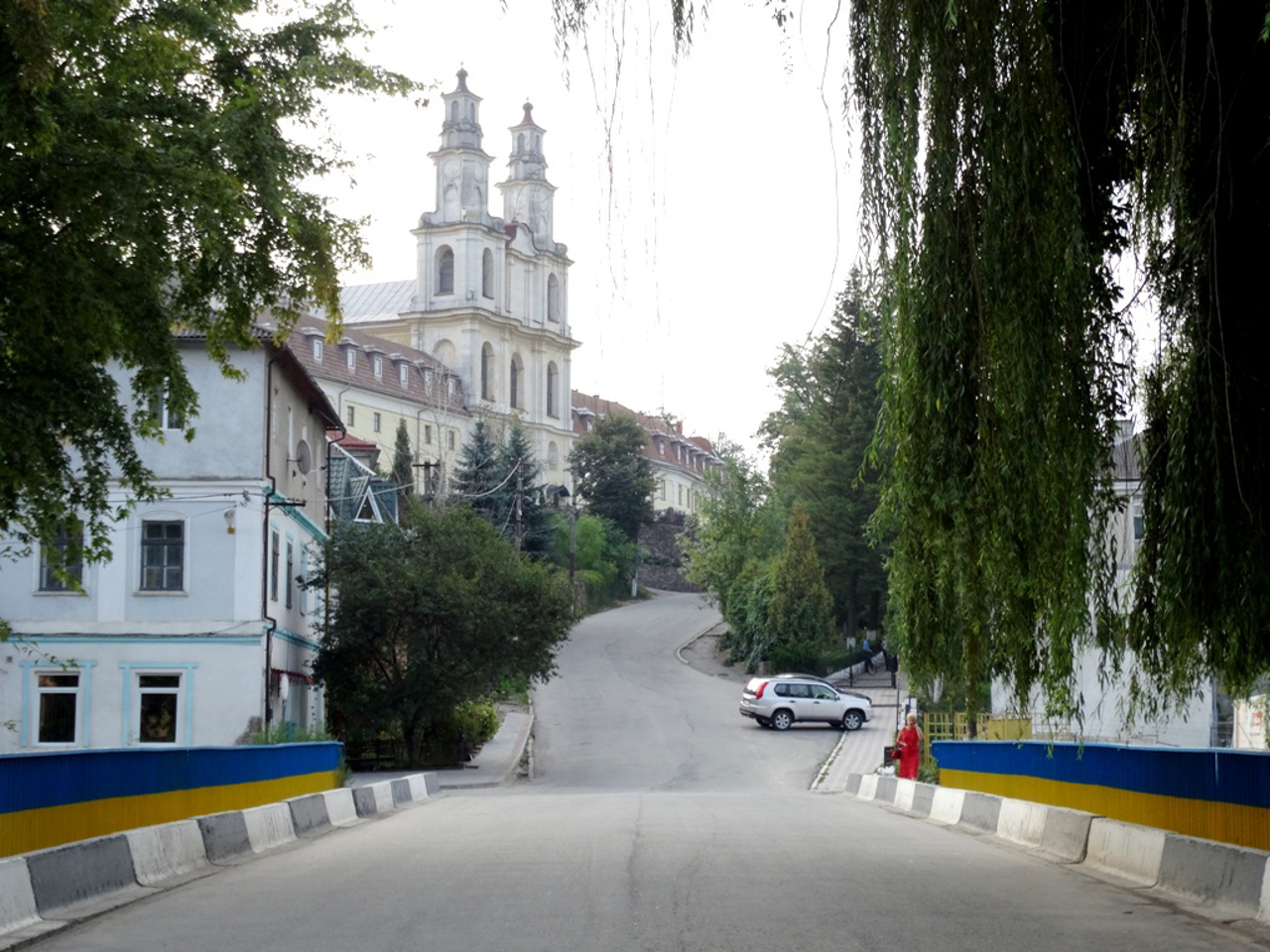
The town of Buchach is one of the most picturesque towns of Podillya, located on the high banks of the Strypa River.
It has been known since 1397 as the property of the Buchaksky magnates. In the 16th century, it passed to the Holskys, then to the Potocki, who built a castle in the Renaissance style on the site of an older one (the ruins have survived).
In 1672, a peace treaty between the Ottoman Empire and the Polish-Lithuanian Commonwealth, known as the "Peace of Buchach", was signed in Buchach under the "Golden Linden" tree, which was preserved by the road in the village of Sokoliv. The border passed along the Strip and divided the city into two parts - the eastern (Turkish) and the western (Polish). Turkish occupation lasted 11 years. In 1683, the Pol ...
The town of Buchach is one of the most picturesque towns of Podillya, located on the high banks of the Strypa River.
It has been known since 1397 as the property of the Buchaksky magnates. In the 16th century, it passed to the Holskys, then to the Potocki, who built a castle in the Renaissance style on the site of an older one (the ruins have survived).
In 1672, a peace treaty between the Ottoman Empire and the Polish-Lithuanian Commonwealth, known as the "Peace of Buchach", was signed in Buchach under the "Golden Linden" tree, which was preserved by the road in the village of Sokoliv. The border passed along the Strip and divided the city into two parts - the eastern (Turkish) and the western (Polish). Turkish occupation lasted 11 years. In 1683, the Polish king Yan III Sobieskyi visited the city.
The prosperity of Buchach in the 18th century is connected with the activities of the magnate Potocki family, to whom the city owes its historical development to a large extent. With the funds of the Potoskis, with the participation of the outstanding architect Meretyn and the famous sculptor Pinzel, many churches and the majestic town hall, which is now the decoration of the city, were built. Buchach became the center of education at the beginning of the 19th century, when a gymnasium was founded at the Basilian monastery.
Shumel Yosef Agnon, writer and Nobel laureate, was born here.
The city is known for the production of "Buchach" cognacs, the foundation of which was laid by Count Potoski.
Місто Бучач - одне із наймальовничіших міст Поділля, розташоване на високих берегах річки Стрипи.
Відоме з 1397 року як власність литовських магнатів Бучацьких. У XVI столітті перейшло до Гольських, потім до Потоцьких, які побудували замок в стилі ренесансу на місці більш давнього (збереглися руїни).
В 1672 році в Бучачі під деревом "Золота Липа", яке збереглося при дорозі в селі Соколів, був підписаний мирний договір між Османською імперією та Річчю Посполитою, відомий як "Бучацький мир". Кордон пройшов по Стрипі й розділив місто на дві частини - східну (турецьку) і західну (польську). Турецька окупація тривала 11 років. У 1683 році в місті побував польський король Ян III Собеський.
Розквіт Бучача в XVIII столітті пов'язаний з діяльністю магнат ...
Місто Бучач - одне із наймальовничіших міст Поділля, розташоване на високих берегах річки Стрипи.
Відоме з 1397 року як власність литовських магнатів Бучацьких. У XVI столітті перейшло до Гольських, потім до Потоцьких, які побудували замок в стилі ренесансу на місці більш давнього (збереглися руїни).
В 1672 році в Бучачі під деревом "Золота Липа", яке збереглося при дорозі в селі Соколів, був підписаний мирний договір між Османською імперією та Річчю Посполитою, відомий як "Бучацький мир". Кордон пройшов по Стрипі й розділив місто на дві частини - східну (турецьку) і західну (польську). Турецька окупація тривала 11 років. У 1683 році в місті побував польський король Ян III Собеський.
Розквіт Бучача в XVIII столітті пов'язаний з діяльністю магнатської родини Потоцьких, яким місто в значній мірі зобов'язане своєю історичною забудовою. На кошти Потоцьких, за участі видатного архітектора Меретина і прославленого скульптора Пінзеля були побудовано багато храмів і велична ратуша, яка є тепер окрасою міста. Центром освіти Бучач став на початку XIX століття, коли при василіанському монастирі була заснована гімназія.
Тут народився письменник, лауреат Нобелівської премії Шумель Йосеф Агнон.
Місто відоме виробництвом коньяків торгової марки "Бучач", основу якого заклав граф Потоцький.
Сплануй своє перебування у Buchach
What to see and where to go in Buchach

Tourist attractions and museums of Buchach


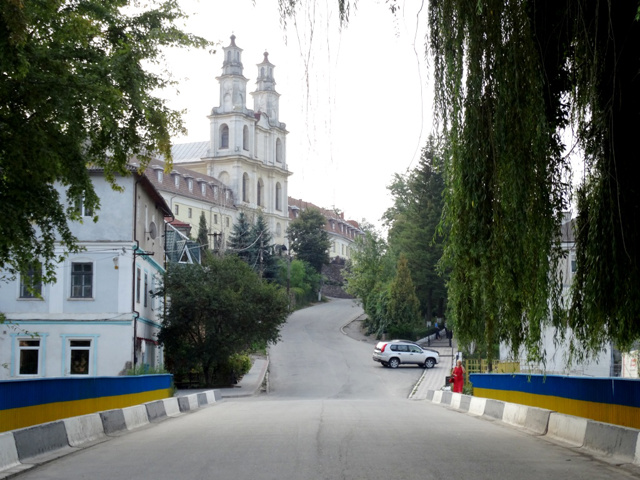
Assumption of Virgin Mary Church
Temple , Architecture
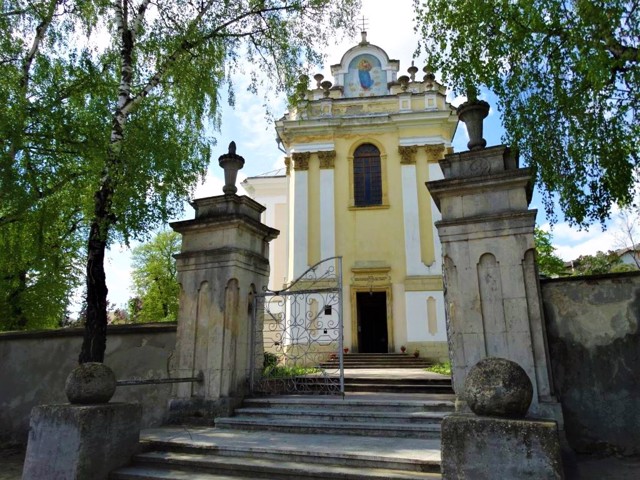
The Catholic Church of the Assumption of the Virgin Mary was built in Buchach under the castle hill near the town hall at the expense of the owner of the town, Kaniv mayor Mykola Vasyl Potoski, as evidenced by his Pylyava family coat of arms on the pediment. The inscription on the portal says: "Out of a desire to have three crosses in Pylyava Potocki, the House of the Cross was built for the glory of God."
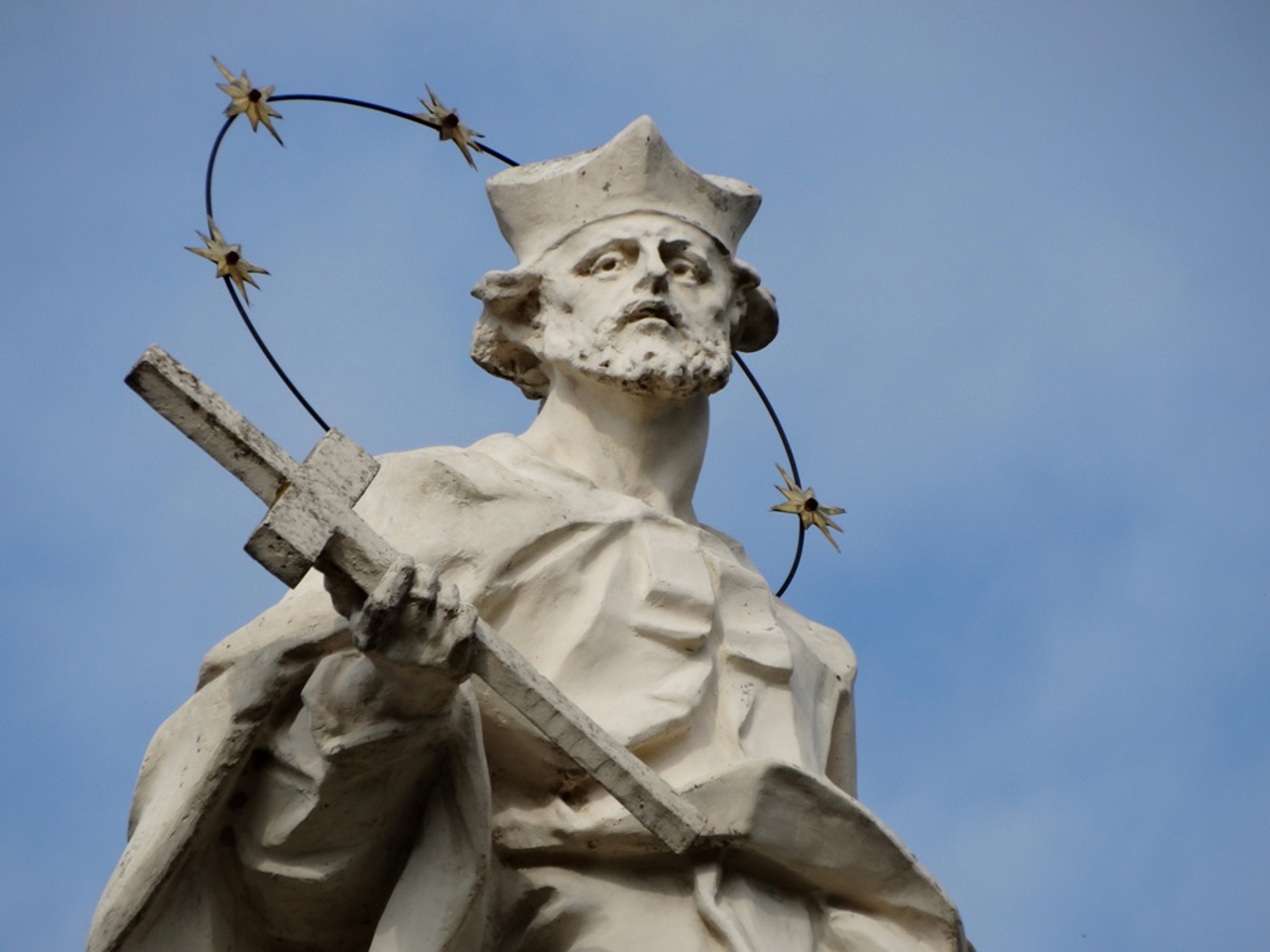
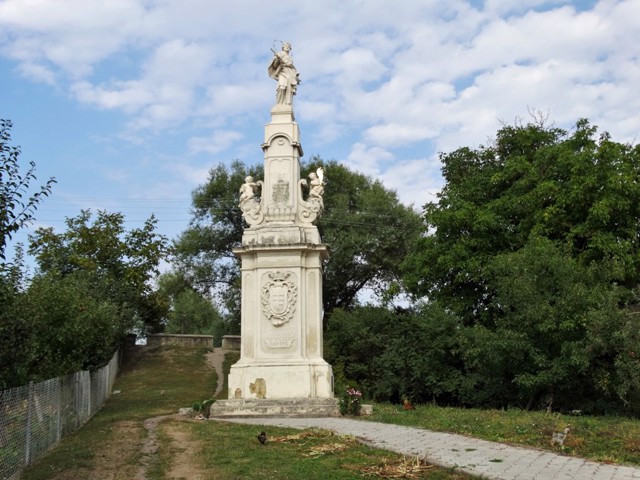
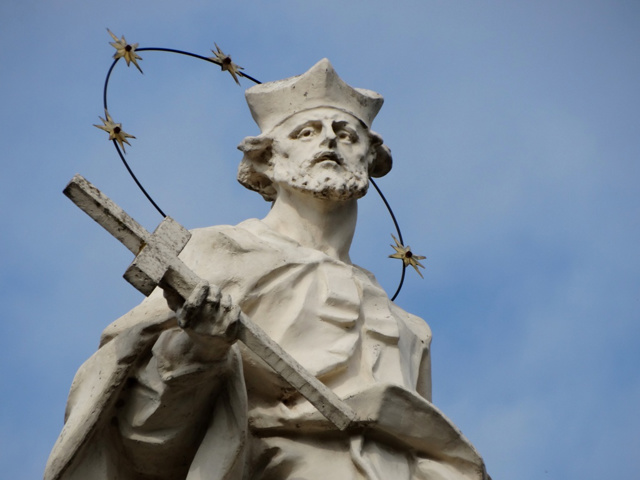
The outstanding sculptor Ivan Pinzel worked on the interior design of the Assumption Church for several years. The monumental composition of five altars includes the image of the Mother of God with the Infant Jesus, the figures of Saint John the Evangelist, Saint Yoakhim, Saint Anna, Saint Zazarius, Archangel Michael, Saint Yan Nepomuk, angels, allegorical figures of Swiftness and Love, and the composition of the Glory of God.
After the Soviet devastation, the Church of the Assumption of the Virgin Mary in Buchach was restored and is once again welcoming believers.
 Prosvity Street, 2
Add to favorites
Add to route
Buchach Castle
Castle / fortress
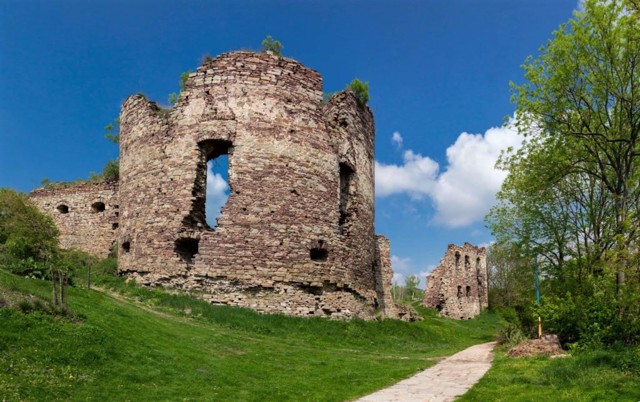
The ruins of the defensive Buchach Castle, which protected Buchach from the Tatars and Turks since the 14th century, stand on a hill in the center of the city.
The fortress was founded in 1379 by the local magnates Buchachskyi, and three centuries later it was fortified by the new owners Potocki. In 1648, the Cossack army tried to capture Buchach Castle, and in 1665 and 1667 it was unsuccessfully besieged by the Tatars. Only in 1672, the Turkish army was able to capture the city and the fortress was destroyed.
The Potocki tried to restore Buchach Castle, but in the 19th century it finally lost its significance and was almost completely dismantled for building materials.
Fragments of walls and towers have been preserved.
Zamkova Street
Add to favorites
Add to route
Buchach Town Hall
Architecture
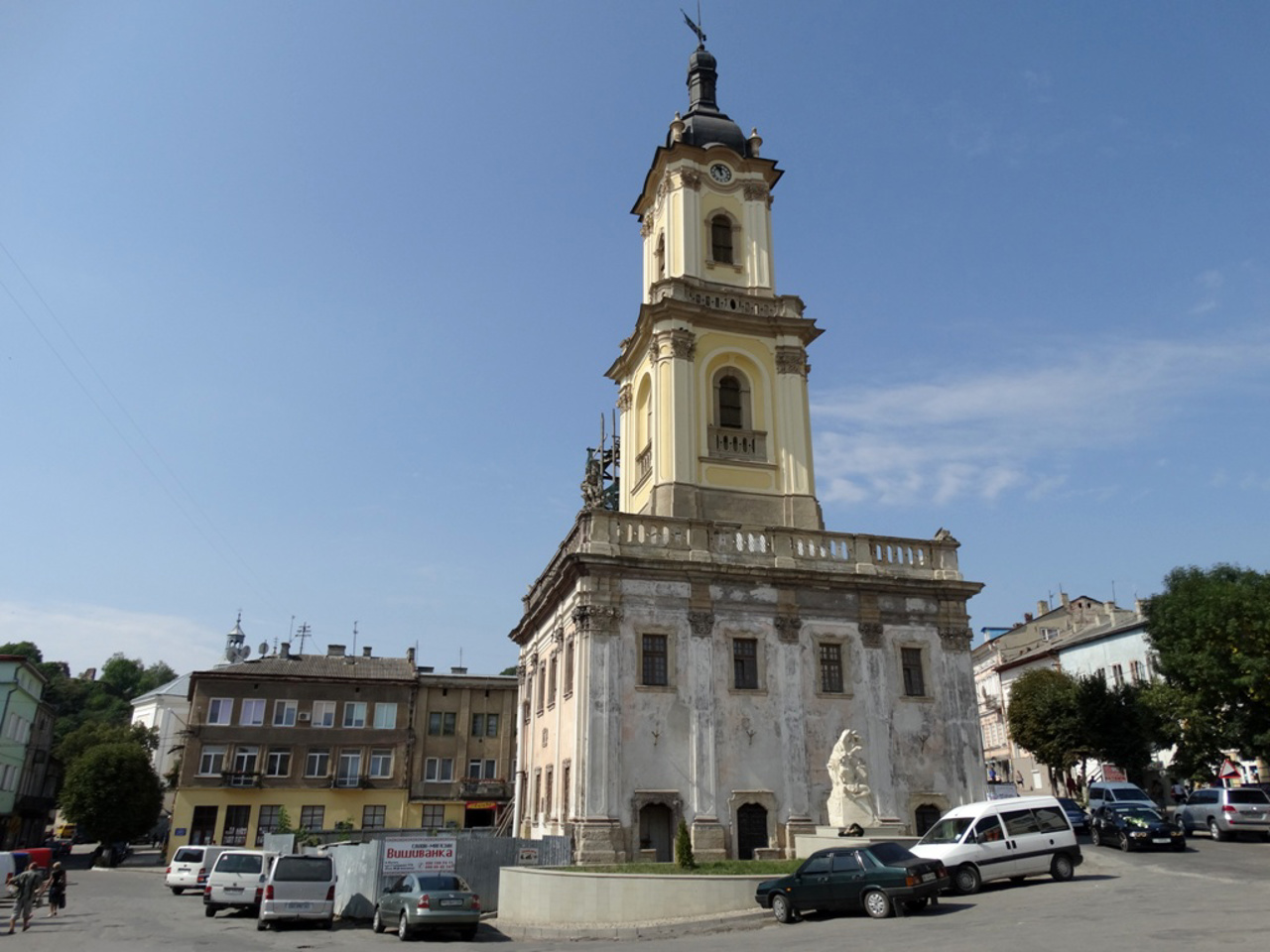
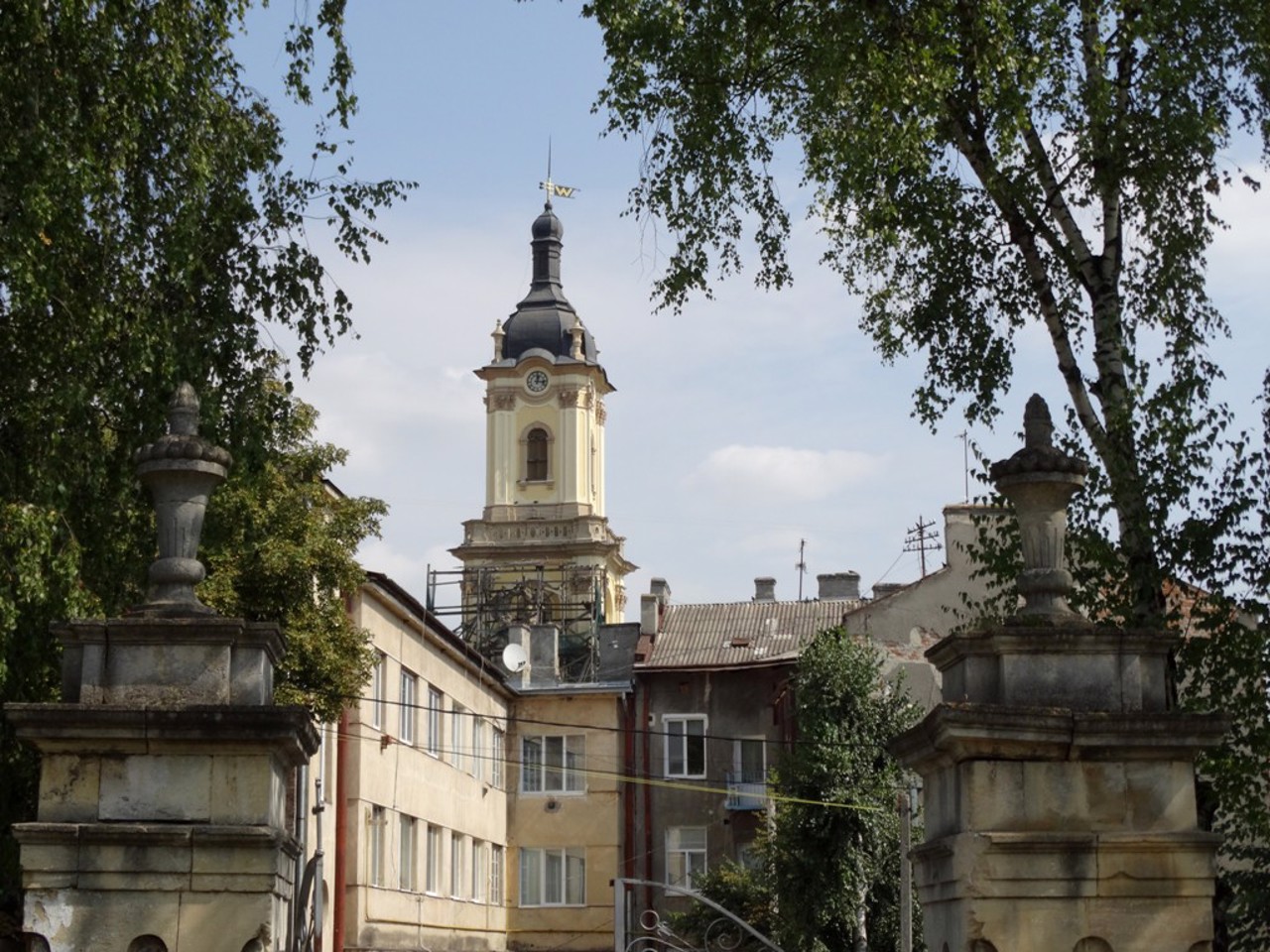
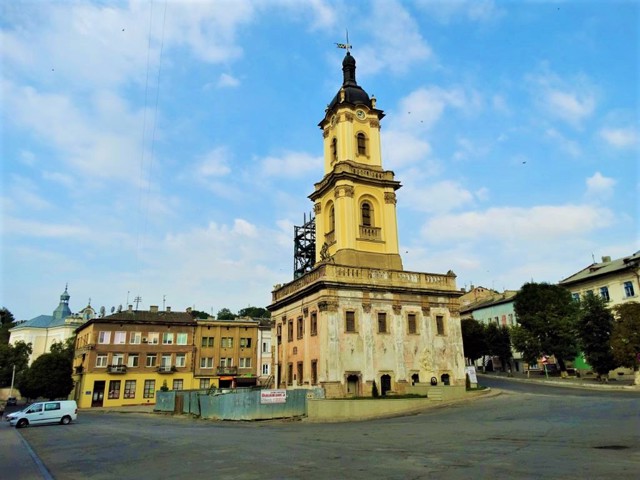
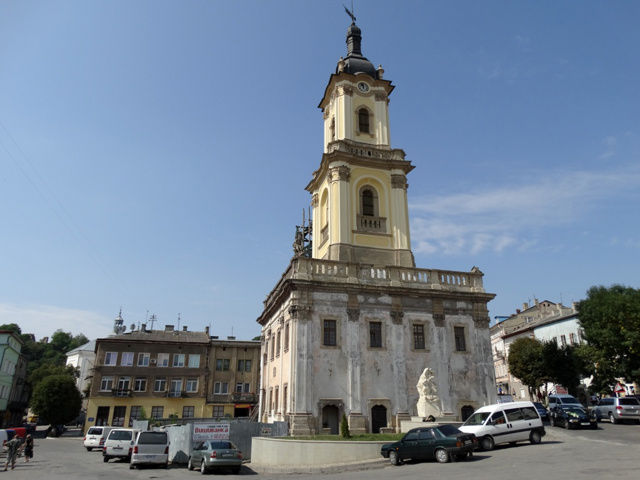
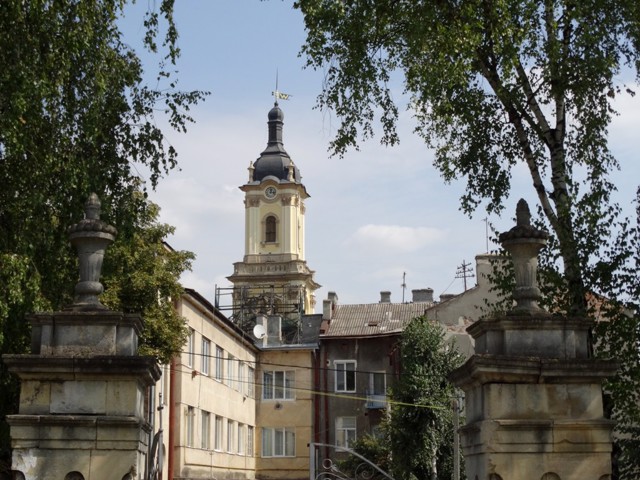
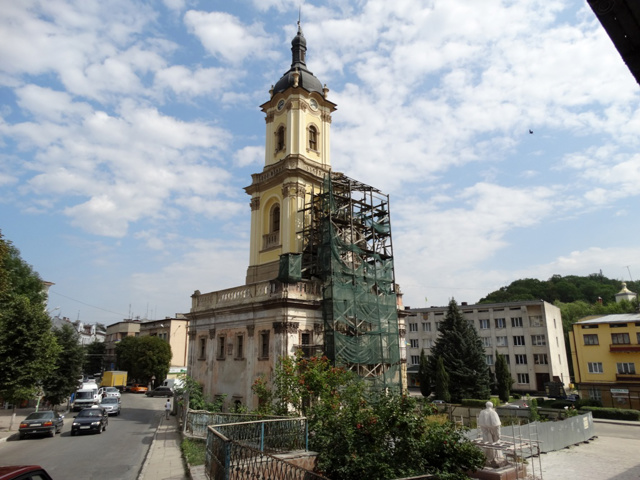
Buchach Town Hall is a wonderful baroque creation of the Lviv architect Bernard Meretin, and is a hallmark of the city.
The 37-meter-high town hall was built in Buchach at the expense of Mykola Vasyl Potoski. The two-story tower rests on a two-story cubic base. Initially, the town hall was crowned with an 18-meter spire (replaced by the current dome after the fire of 1811) and decorated with 17 sculptures by the outstanding sculptor Ivan Pinzel on the theme of the struggle between good and evil. Most of the sculptures were destroyed by a fire in 1865, four of them survived only in fragments.
Thanks to the sophisticated synthesis of architecture and sculpture, the Buchach Town Hall is considered an outstanding work of world architecture of the late Baroque era.
Restoration is currently underway, and the creation of the Ivan Pinzel Museum is planned. The lost sculptures are planned to be replaced with copies. The restored clock on the top tier strikes every quarter of an hour, and every hour plays the melodies of Ukrainian songs.
In 2014, a monument to Ivan Heorhiy Pinzel was erected in front of the town hall.
Halytska Street, 53
Add to favorites
Add to route
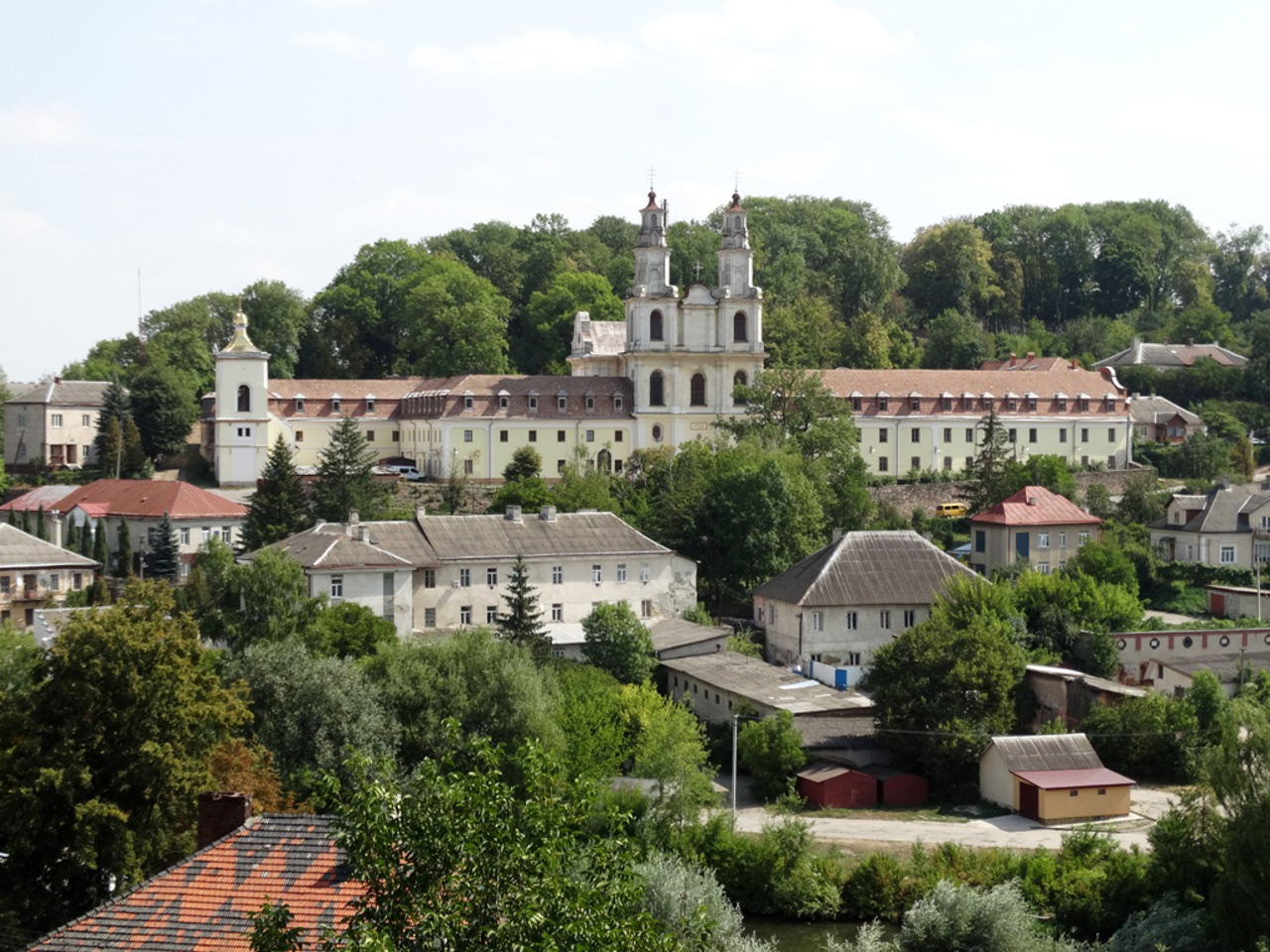
Exaltation of Holy Cross of the Lord Basilian Monastery
Temple , Architecture
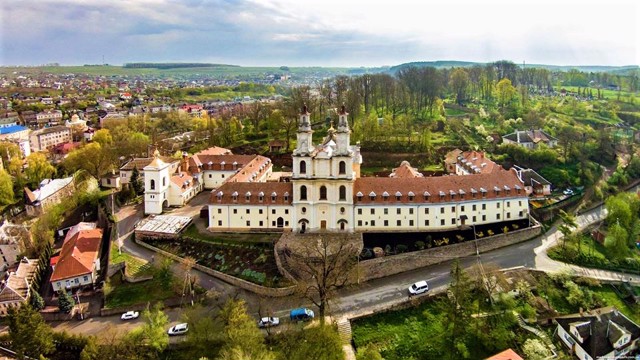
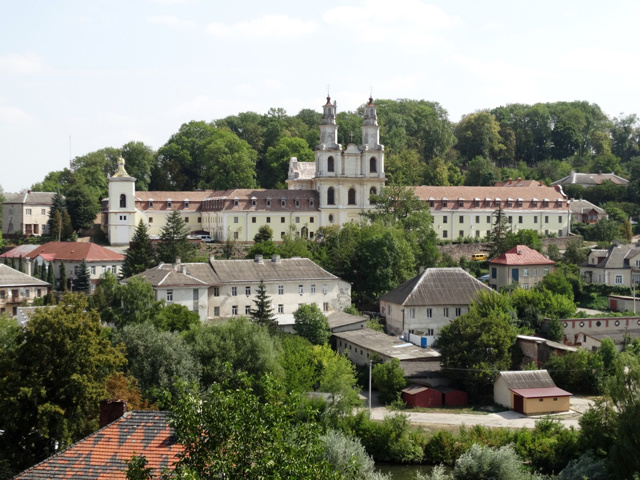
The majestic monastery of the Exaltation of the Holy Cross of the Lord rises in the center of Buchach on the opposite hill from Buchach Castle, in the Fedir tract.
It was built for the parents of the Basilians, who were invited to the city by Stefan Potoski in the 18th century to found a theological school.
The central building of the Basilian Monastery complex is the Baroque Church of the Ascension of the Holy Cross with a bell tower (architect Yohan Shiltser). It is adjoined on two sides by the buildings of the cells and the Basilian gymnasium (now the Saint Yosafat Buchach Collegium).
During the Soviet era, the Basilian Monastery was closed and fell into disrepair, but after 1991, a complete restoration was carried out. All buildings, including the hydroelectric power plant on the Strypa River, have been restored and are being used as intended.
Adama Mitskevycha Street, 19
Add to favorites
Add to route
Intercession of Holy Virgin Church
Temple , Architecture
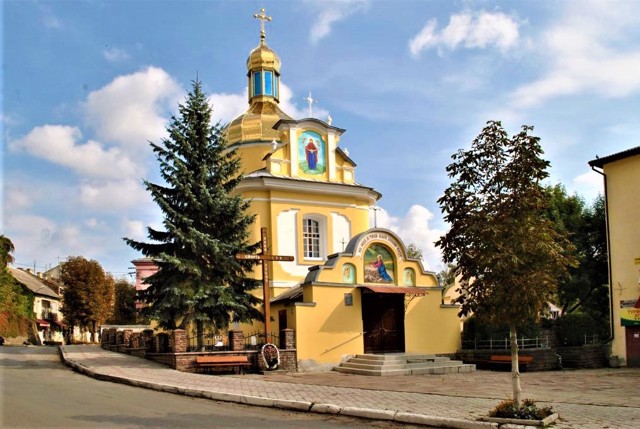
The Church of the Intercession of the Holy Virgin was built in Buchach in 1764 in the late Baroque style according to the project of the architect Bernard Meretyn (according to other sources - Yohan Shiltser).
The Intercession temple has a defensive character. The impression of "femininity" of the interior is created by the rounded corners and harmonious lines of the portal. The Deacon Gate, the work of the outstanding sculptor Ivan Pinzel, has been preserved.
During the revival of the Intercession Church after the Soviet period, the burials of dozens of repressed residents of the city were discovered in the basements.
Halytska Street, 23
Add to favorites
Add to route

Reviews Buchach
Geographical information about Buchach
| {{itemKey}} | {{itemValue}} |
|---|---|
| Region |
Ternopil |
Surrounding cities and villages
Practical tips to visit Buchach
No data available at this time
Functional temporarily unavailable
Follow us
 1.svg "Twitter")
 1.svg "Facebook")
 1.svg "Instagram")