Functional temporarily unavailable



General information about Zbarazh
The town of Zbarazh, rich in historical sights, is spread out on the banks of the Hnyezna River (a tributary of the Seret River), on the northwestern outskirts of the Tovtry mountain range.
Known since 1211, it was part of the Principality of Galicia-Volyn, then Poland, Austria-Hungary. In the Stary Zbarazh tract, an Ancient Rus settlement with the remains of a castle built in the 14th century by Prince Dmytro Korybut of the Hedyminovych dynasty has been preserved. Since 1434, the city has been the residence of the Polish princes of Nesvytskyi, who soon became known as Zbarazkyi. In 1589, the city and the castle were completely burned by the Tatars.
After that, the brothers Khrystofor and Yuriy Zbarazky ...
The town of Zbarazh, rich in historical sights, is spread out on the banks of the Hnyezna River (a tributary of the Seret River), on the northwestern outskirts of the Tovtry mountain range.
Known since 1211, it was part of the Principality of Galicia-Volyn, then Poland, Austria-Hungary. In the Stary Zbarazh tract, an Ancient Rus settlement with the remains of a castle built in the 14th century by Prince Dmytro Korybut of the Hedyminovych dynasty has been preserved. Since 1434, the city has been the residence of the Polish princes of Nesvytskyi, who soon became known as Zbarazkyi. In 1589, the city and the castle were completely burned by the Tatars.
After that, the brothers Khrystofor and Yuriy Zbarazkyi decided to move their residence to the east - to the place of the current Zbarazh, where they built a new castle, which has been perfectly preserved to this day.
In the 18th century, it belonged to the Vyshnevetskyi princes. Zbarazh castle became famous during the War of Liberation, having withstood the siege of Bohdan Khmelnytskyi's Cossack troops in 1649, which ended with the signing of the Zboriv Agreement (these events are described in Henryk Senkevych novel "Fire and Sword"). In 1707, Hetman Ivan Mazepa and Russian Tsar Peter I visited Zbarazh.
Now the city is the center of the Ternopil Castles National Reserve. There are many architectural monuments, the tourist infrastructure is developing: hotels, restaurants.
Багате на історичні пам'ятки містечко Збараж розкинулося на берегах річки Гнєзна (притока ріки Серет), на північно-західних околицях гірської гряди Товтри.
Відоме з 1211 року, входило до складу Галицько-Волинського князівства, потім Польщі, Австро-Угорщини. В урочищі Старий Збараж збереглося давньоруське городище із залишками замку, побудованого в XIV столітті князем Дмитром Корибутом з династії Гедиміновичів. З 1434 року місто стало резиденцією польських князів Несвицьких, які незабаром стали називатися Збаразькими. У 1589 році місто та замок були повністю спалені татарами.
Після цього брати Христофор та Юрій Збаразькі вирішили перенести свою резиденцію на схід - на місце нинішнього Збаража, де і з ...
Багате на історичні пам'ятки містечко Збараж розкинулося на берегах річки Гнєзна (притока ріки Серет), на північно-західних околицях гірської гряди Товтри.
Відоме з 1211 року, входило до складу Галицько-Волинського князівства, потім Польщі, Австро-Угорщини. В урочищі Старий Збараж збереглося давньоруське городище із залишками замку, побудованого в XIV столітті князем Дмитром Корибутом з династії Гедиміновичів. З 1434 року місто стало резиденцією польських князів Несвицьких, які незабаром стали називатися Збаразькими. У 1589 році місто та замок були повністю спалені татарами.
Після цього брати Христофор та Юрій Збаразькі вирішили перенести свою резиденцію на схід - на місце нинішнього Збаража, де і заклали новий замок, що чудово зберігся до наших днів.
В XVIII столітті він належав князям Вишневецьким. Збаразький замок прославився під час Визвольної війни, витримавши в 1649 році облогу козацьких військ Богдана Хмельницького, що закінчилося підписанням Зборівської угоди (ці події описані в романі Генрика Сенкевича "Вогнем і мечем"). У 1707 році в Збаражі побували гетьман Іван Мазепа та російський цар Петро I.
Зараз місто є центром Національного заповідника "Замки Тернопілля". Є безліч архітектурних пам'яток, розвивається туристична інфраструктура: готелі, ресторани.
Сплануй своє перебування у Zbarazh
What to see and where to go in Zbarazh

Tourist attractions and museums of Zbarazh


Saint Anthony of Padua Church and Bernardine Monastery
Temple , Architecture
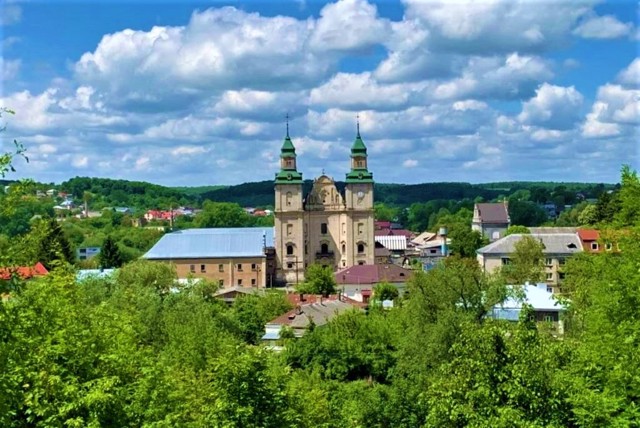
The huge church of Saint Anthony, which is the central building of the Bernardine monastery, is clearly visible from the castle hill.
The monastery was founded by Prince Yuriy Zbarazky in 1627, the construction of the original complex was completed in the 1650s by the efforts of Yanush Korybut-Vyshnivetskyi and his wife Yevheniya. In its current Renaissance-baroque form, the church was rebuilt in 1723-1755 at the expense of the Kyiv voivode Yuzef Potoski (architect Yan Hants). A philosophical school, then a gymnasium, and a hospital worked at the monastery.
During Soviet times, the complex was abandoned, but in 1990 it was returned to the Bernardine family. Restoration is underway, services are held.
The interior contains altars with sculptures by Anton Osinsky (18th century), fragments of frescoes from the 18th-19th centuries.
 Nezalezhnosti Street, 8
Add to favorites
Add to route
Zbarazh Castle
Castle / fortress
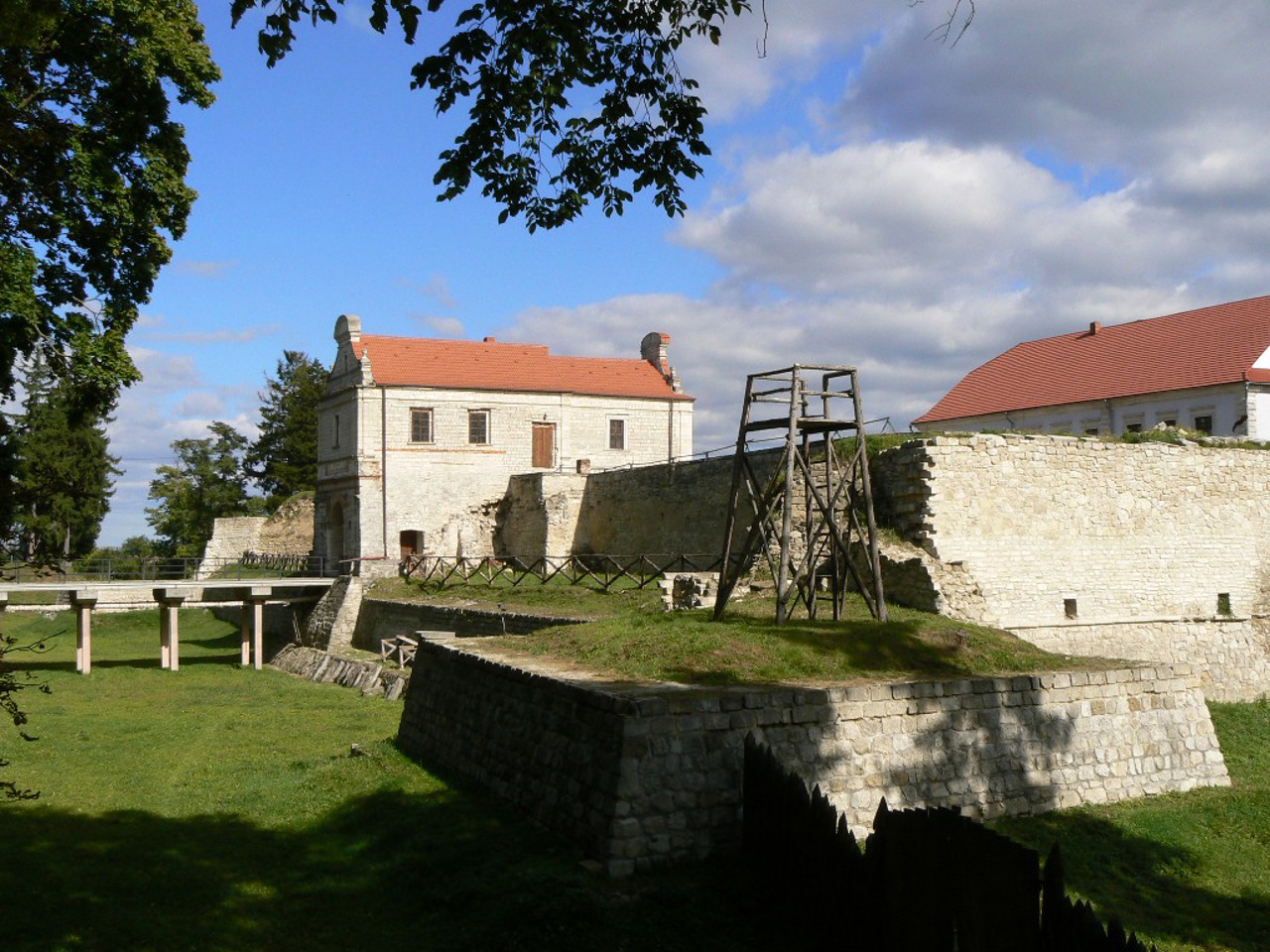
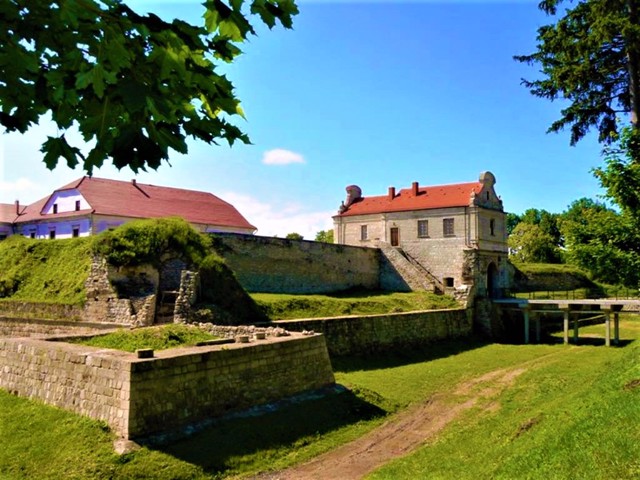
The architectural complex of Zbarazh Castle is one of the best-preserved ancient defensive structures of the Ternopil region, an architectural monument of national importance. For centuries, the castle in Zbarazh served as a residence for Lithuanian princes and Polish nobles, and is now the center of the National Reserve "Castles of Ternopil Region".
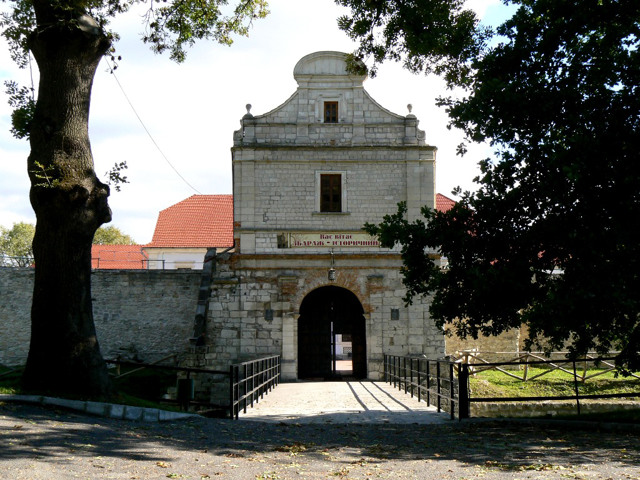
The construction of a new fortress instead of the fortress in Stary Zbarazh destroyed by the Tatars was started in 1620 by Princes Hristofor and Yuriy Zbarazkyi, who commissioned a project in Venice from the famous architect and engineer Vinchentso Skamotstsi. His work embodied the advanced achievements of the art of fortification of that time.
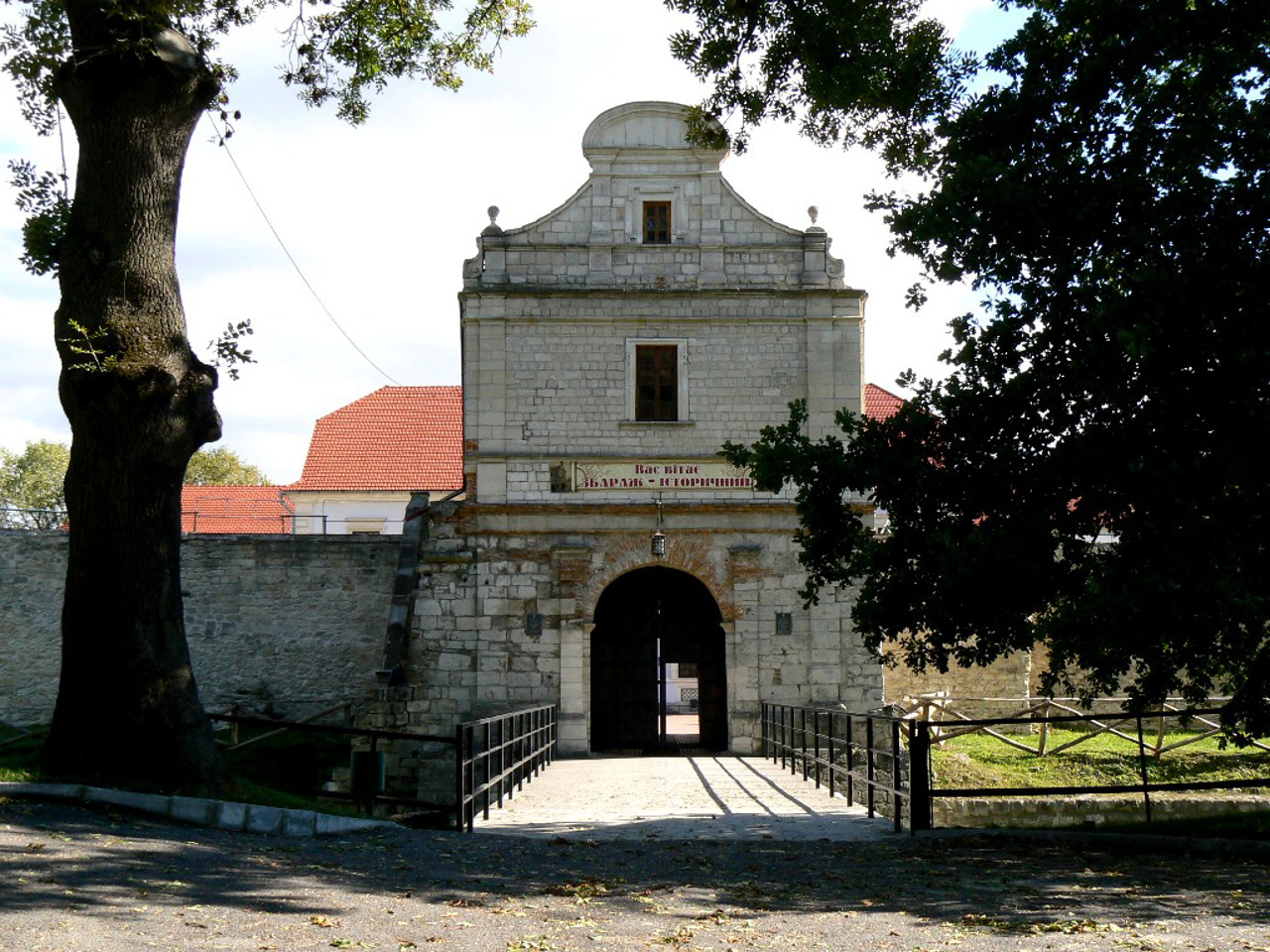
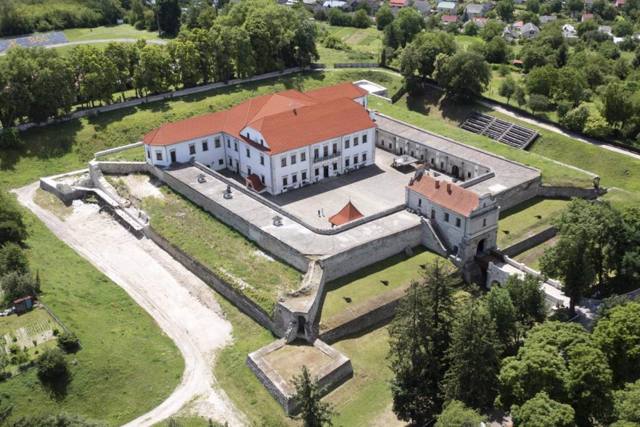
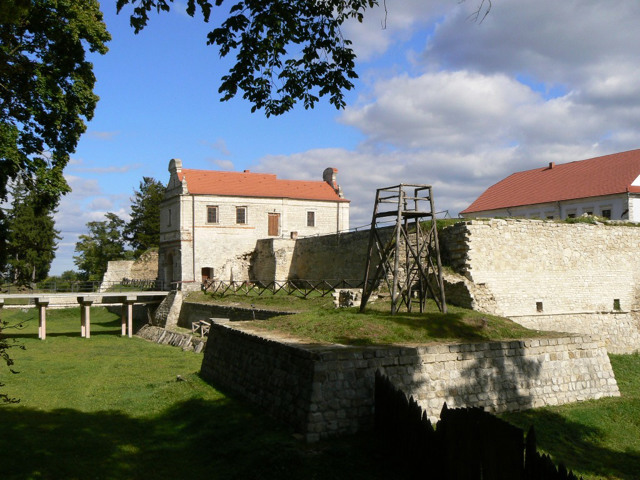
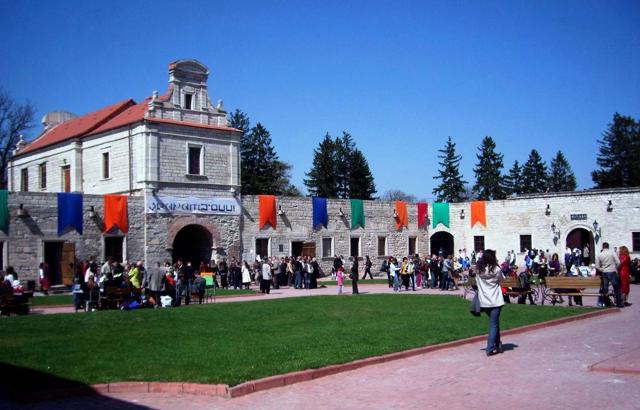
The castle consists of a Renaissance-style palace, casemate ramparts surrounding it, an entrance tower and a moat. In the courtyard there is a siege well 70 m deep, connected by underground passages with the Bernardine monastery at the other end of Zbarazh.
In the 17th century, the new owners of Zbarazh Castle, Princes Vyshnevetskyi, fortified it with four bastions. In 1649 the castle withstood a seven-week siege of Bohdan Khmelnytsky's Cossack army, and in 1734 it was captured by the Haydamaks.
Potocki magnates in the XVIII century turned the military fortress into an ordinary palace estate.
During the first half of the 20th century, the building was severely damaged during the wars, and restoration was completed only in 1985. On the basis of Zbarazh Castle, in 1994, the State Historical and Architectural Reserve was created, which later became the National Reserve "Castles of Ternopil Region".
Over the past decade, the White Fireplace Hall, the Arched Gallery, the Upper and Lower Vestibules, the Lord's Living Room and the Mirror Hall have been restored in Zbarazh Castle. The medieval interiors feature exhibitions of antiquities, paintings, icons, and antique furniture, as well as exhibitions of works of art by modern masters. An archaeological and ethnographic exhibition has been set up, a collection of weapons is exhibited in the casemates, unique works by woodcarver Viktor Lupiychuk are on display, and the creation of the diorama "Siege of 1649" is underway.
In one of the casemates there is a restaurant "Legend", in the manor house (XIX century) on the outskirts of the park opened the hotel "Hetman".
Bohdana Khmelnytskoho Street, 28
Add to favorites
Add to route
Assumption of Blessed Virgin Church
Temple , Architecture
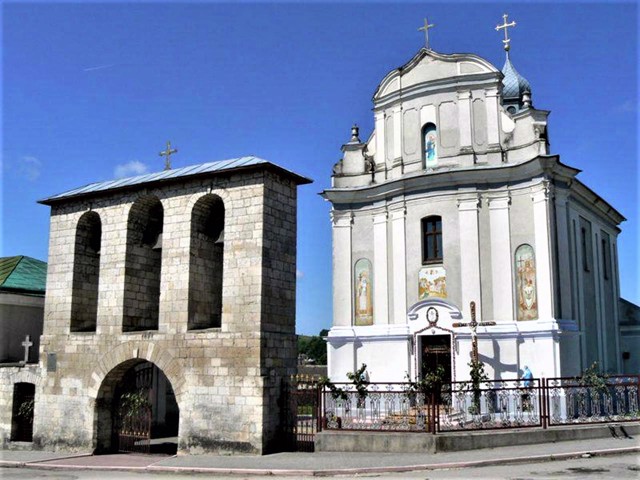
The Orthodox Church of the Assumption of the Blessed Virgin Mary is a former Trinitarian church-monastery, built in Zbarazh in 1755-1758.
After the order of the Trinitarians ceased its activities in the city, the church was taken over by the Ukrainian community. At the beginning of the 20th century, a bell tower was added. In Soviet times, a local history museum was located here. In 1990, restoration was carried out.
The baroque Assumption church is part of the complex of the former Felician nunnery (XVIII century), which now houses the Theological Seminary named after Cyril and Methodius.
Yakova Chayky Street, 1
Add to favorites
Add to route
Christ's Resurrection Church
Temple , Architecture
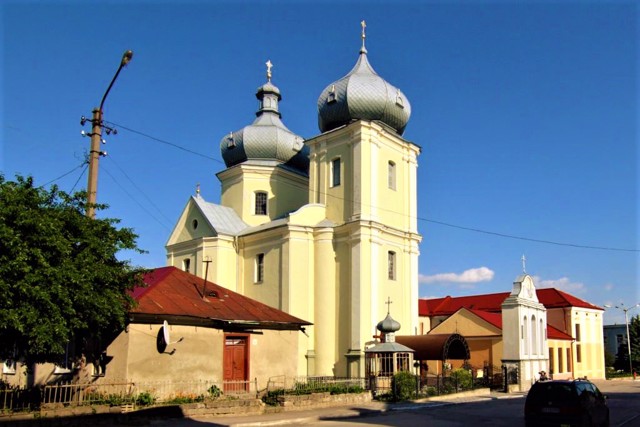
The Church of the Resurrection of Christ was built in Zbarazh in the 18th century at the expense of the burgher Hryhoriy Hymonyuk, the construction was completed by Count Mykola Potoski.
Made in the Ukrainian Baroque style. It was preserved in a slightly modified form as a result of large-scale restoration works in 1879-1933.
Today, the Church of the Resurrection of Christ is active and belongs to the Greek-Catholic community of the city.
Mykhayla Hrushevskoho Street, 2
Add to favorites
Add to route
National Reserve "Castles of Ternopil Region"
Historic area , Museum / gallery
National Reserve "Castles of Ternopil Region" (Zamky Ternopillia) unites 11 ancient defensive structures (castles and fortresses), which are best preserved in the territory of Ternopil region. The institution is engaged in the preservation, restoration and tourist promotion of these monuments of historical and cultural heritage.
In the 17th-18th centuries, there were over a hundred castles in Ternopil Podillia, which served as fortified residences of local landowners-aristocrats, mainly during the Polish-Lithuanian rule in the region. Of these, 34 have survived to this day in varying states of preservation.
The base of the "Ternopil Castles" reserve since 1994 is the architectural complex of the 17th-century Zbarazh Castle, together with the Church of the Transfiguration of the Lord of 1600 and the ensemble of buildings of the 17th-18th centuries Bernardine Monastery in the city of Zbarazh, which are architectural monuments of national importance.
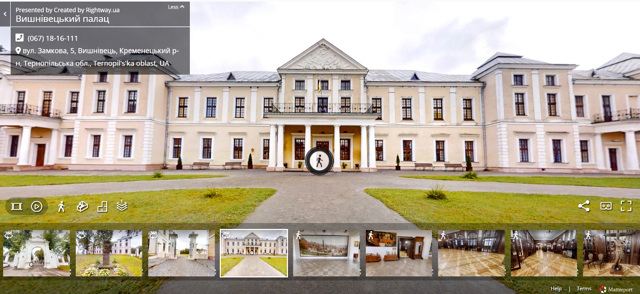
It is in the restored halls of the Zbarazh Castle that the largest part of the reserve's collection is presented: archaeological materials, weapons, objects of art, etc. Active restoration work and the deployment of new expositions continue in the Vyshnivets Palace. A small exposition is arranged in the Skalat Castle. The remaining objects of the reserve are in a state of conservation and ongoing restoration work.
The administration of the reserve is located in a two-story building of the former county eldership built in 1891, which is located on the southwestern side of the Zbarazh Castle, in the Zbarazhsky Pidzamche area. The reserve regularly hosts festivals, cultural and artistic events, scientific conferences and other events.
The National Reserve "Castles of Ternopil Region" includes:
- Zbarazh Castle (Zbarazh);
- Vyshnivets Palace and Park Complex (Vyshnivets);
- Skalat Castle (Skalat);
- Terebovlia Castle (Terebovlia);
- Chortkiv Castle (Chortkiv);
- Tvorovsky Castle (Pidzamochok);
- Yazlovets Castle (Yazlovets);
- Potocki Castle (Zolotyi Potik);
- Mykulyntsi Castle (Mykulyntsi);
- Skala-Podilska Castle (Skala-Podilska);
- Kryvche Castle (Kryvche).
Bohdana Khmelnytskoho Street, 6
Add to favorites
Add to route

Zbarazh in news and blogs
 13/11/2025
Reviews Zbarazh
Geographical information about Zbarazh
| {{itemKey}} | {{itemValue}} |
|---|---|
| Region |
Ternopil |
Surrounding cities and villages
Practical tips to visit Zbarazh
No data available at this time
Functional temporarily unavailable
Follow us
 1.svg "Twitter")
 1.svg "Facebook")
 1.svg "Instagram")